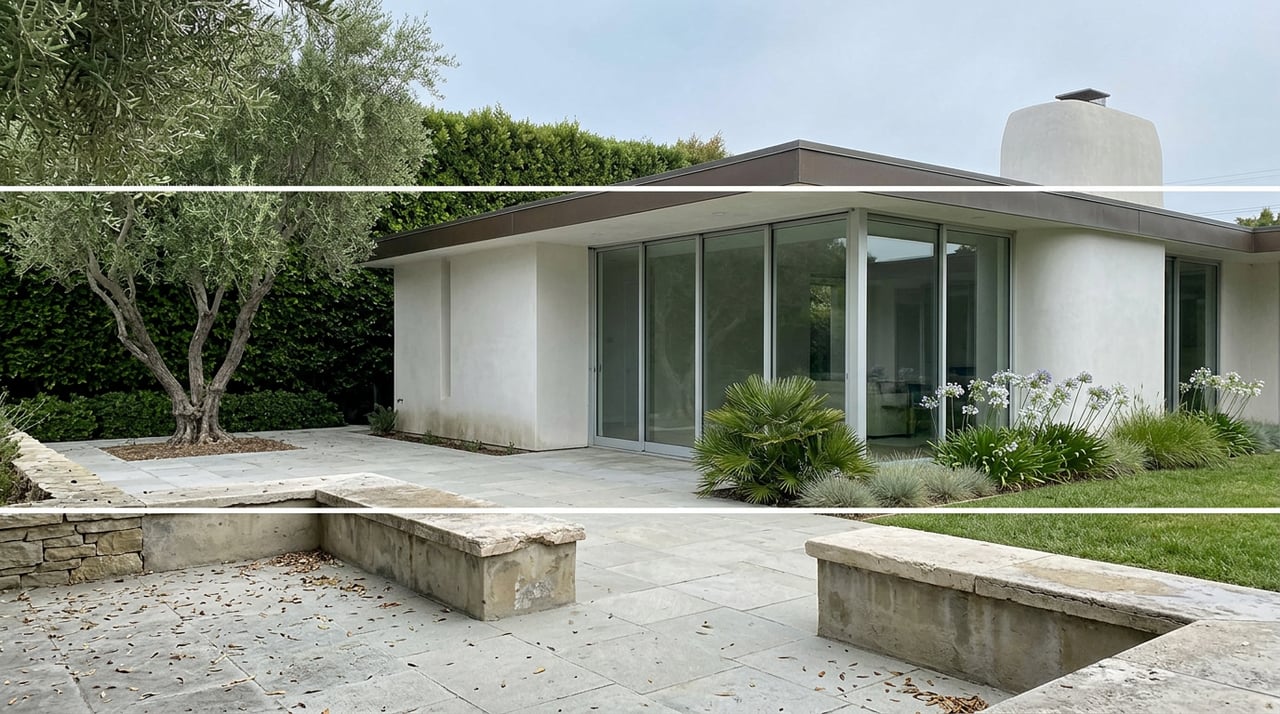
In December 2023, a Del Mar homeowner brought a remodel to the city's Design Review Board and left without an approval. The board's written findings cited four separate problems: unreasonable blockage of a scenic view, unnecessary bulk and mass, a privacy impact on a neighboring property, and concerns about lighting and noise. The vote was six to zero. That is not a story about a bad design. It is a story about what happens when a buyer assumes that owning a lot in Del Mar means they can build what they want on it.
Here is the thing most buyers get wrong about Del Mar right now. They price the home. They price the remodel. They rarely price the calendar. And in a market where homes are going under contract in a matter of weeks, the one piece of due diligence that actually protects a remodel-minded buyer, checking a property's entitlement path before waiving contingencies, is exactly the step that speed tempts people to skip.
The Entire City Sits in the Coastal Zone
This is not a detail specific to bluff-front lots or the Beach Colony. The City of Del Mar has stated plainly, in its own public meeting notices, that the entire city is located within the California Coastal Zone. That single fact is why almost any exterior or structural change, from a second-story addition to a full rebuild, runs through a layered review process rather than a standard building permit alone.
For a buyer evaluating a home purely on square footage and finishes, this is invisible. For a buyer who is planning to add a primary suite, push out a kitchen wall, or replace an aging single-story with something larger, it is the difference between a straightforward renovation and a process that touches two separate governing bodies before a shovel goes in the ground.
The Two Boards You Actually Answer To
The first stop is Del Mar's own Design Review Board, known locally as the DRB. According to the city's own FAQ on the process, there is generally a six to eight week gap between the date a completed application is submitted and the date it actually gets a hearing. The board meets once a month, on the fourth Wednesday at 6 p.m. in Del Mar's Town Hall at 1050 Camino Del Mar, and if your application isn't ready in time for that month's cutoff, you wait for the next one.
If the DRB denies a project, or approves it with conditions an owner doesn't like, the next step is an appeal to the City Council. That appeal has to be filed with the City Clerk within ten working days of the decision, and it isn't automatic. The Council can either uphold the DRB's decision outright or schedule a new public hearing to reconsider the project from scratch.
Then there is a second layer some properties never touch and others can't avoid. If a project sits in what the city designates as the Coastal Development Appeals Area, the local decision on a Coastal Development Permit can be appealed again, this time to the California Coastal Commission, within ten calendar days after the city's action becomes final. That state-level review adds its own calendar, and it is not one Del Mar controls.
Here is roughly what that stack of timelines looks like when nothing is contested:
| Stage | Typical window |
|---|---|
| Staff completeness review after application submitted | Part of the 6 to 8 week window before a hearing |
| Time from complete application to first DRB hearing | 6 to 8 weeks |
| Window to appeal a DRB decision to City Council | 10 working days |
| Window to appeal a final CDP decision to the Coastal Commission | 10 calendar days after local action is final |
None of these numbers include the time it takes to actually prepare a complete application, the weeks a project can sit on a DRB agenda if the board asks for revisions, or the additional months that follow if a project lands in front of the Coastal Commission itself. They are the floor, not the ceiling.
What Actually Gets a Project Turned Down
The December 2023 denial is useful precisely because it wasn't a technicality. The board's findings pointed to view blockage, bulk and mass, privacy, and lighting and noise, the same categories that come up again and again in Del Mar's design review ordinance. A buyer touring a home and imagining a second story rarely asks whether that addition would sit in a neighbor's sightline to the ocean or the lagoon. The DRB asks exactly that question, in public, with the neighbor often in the room.
This is also why the city's own guidance suggests that the fastest path to approval usually involves meetings with planning staff before the hearing and conversations with surrounding neighbors about how a project will actually read from their side of the fence. That is a process step, not a paperwork step, and it takes time that a thirty or forty five day escrow simply doesn't have.
Why This Matters More Right Now Than It Did a Few Years Ago
Del Mar's detached home market has tightened considerably in 2026. As of July 2026, the median sales price for a detached single-family home in Del Mar stood at $3,825,000, according to Greater San Diego Association of REALTORS data, up sharply from a year earlier. Inventory fell to roughly 3.9 months of supply, down from about 6.1 months the year before. Homes are also moving faster, with a median of 48 days on market for detached homes, down from 61 days the previous year. Sellers are seeing the benefit of that speed too, with detached homes closing at just over 100 percent of original list price.
Put those numbers next to the entitlement timeline above and the risk becomes clear. A buyer competing in a market this tight is under real pressure to waive inspection and other contingencies to win a home. That same pressure is what makes it easy to skip the one question that matters most for a remodel-intent purchase: has anyone already tested this property's design review path, and if not, what does the calendar actually look like before a shovel goes in the ground. The market's speed and the entitlement process's pace are moving in opposite directions, and the buyer absorbs that gap either way.
Before You Waive the Contingency
A few questions are worth answering before removing contingencies on a Del Mar property you intend to change:
- Has the current owner filed for or received any DRB approval, CDP, or variance on this address. Prior applications are part of the public record at City Hall.
- Does the parcel sit inside the Coastal Development Appeals Area, which determines whether a local decision can be pulled up to the California Coastal Commission.
- What does your architect or a local land use consultant estimate for a realistic hearing date, given the current DRB calendar, not the six to eight week floor.
- Are there specific view corridors, from the street or from a neighboring lot, that your planned addition would cross. This is the single most common ground for denial in the record.
None of this is legal advice, and a property's specific zoning and coastal status should always be confirmed with the City of Del Mar's planning department or a qualified land use attorney before you finalize plans or remove contingencies.
A Short FAQ
Does an interior-only remodel need DRB or CDP review? Interior work that doesn't touch the exterior or structural systems typically avoids the full review process, but any change to the roofline, footprint, or exterior walls can trigger it. Confirm scope-specific requirements with the city before assuming a project is exempt.
What if I only want to make a few small changes, not a full rebuild? Scope matters less than most buyers expect. Additions that affect height, mass, or a neighbor's view can draw the same level of review as a larger project. The DRB's own findings in the 2023 case involved concerns about bulk and privacy, not square footage alone.
Can I ask the seller for a property's entitlement history before I write an offer? Yes, and it is a reasonable request. Prior DRB applications, hearing minutes, and any CDP filings are part of the public record and can typically be requested from the city's planning department directly.
If you are weighing a Del Mar purchase with a remodel in mind, or preparing to list a home where prior design review history could shape a buyer's plans, it helps to have someone who has watched this process play out in real time. Lorenzo Sorano works with buyers and sellers across Del Mar and North County San Diego on exactly this kind of transaction. Request a confidential home valuation to talk through what your property, or the one you're considering, actually allows.