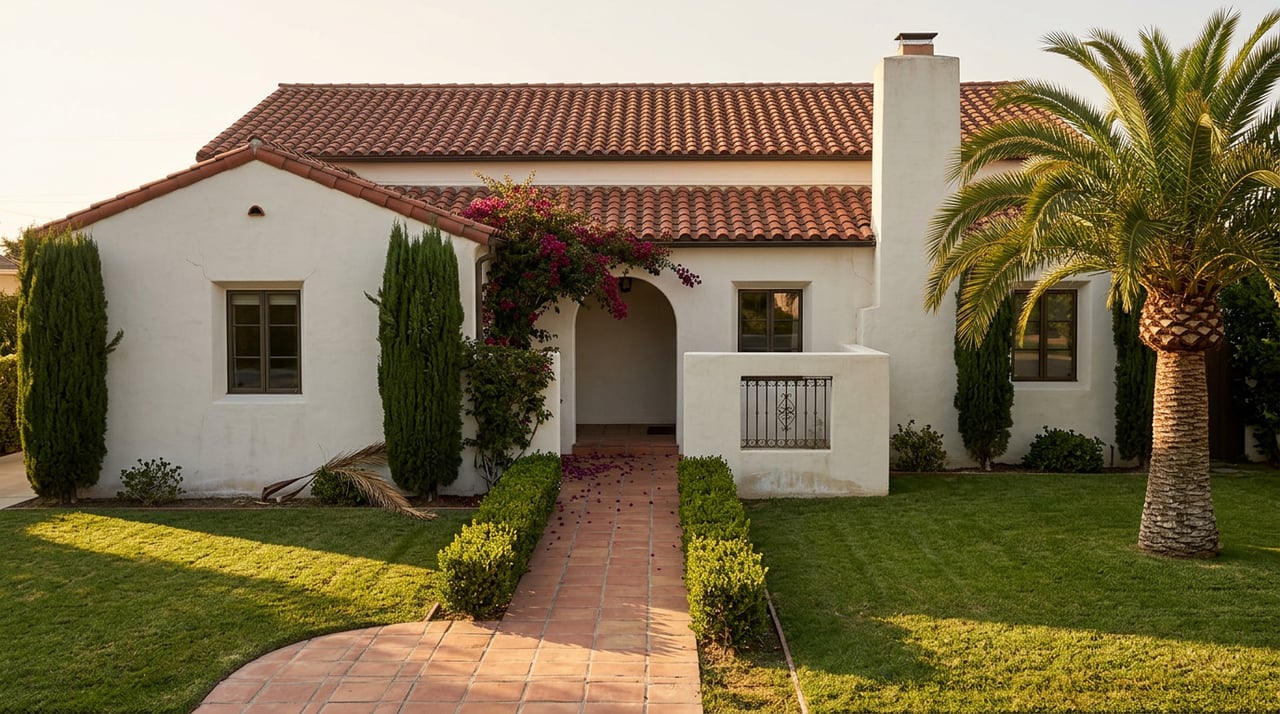
Two homes went up in San Elijo Hills within a year of each other, in the early 2000s, less than a mile apart. One sits in WestRidge, a townhome community built by Pulte Homes in 2004, where the HOA runs about $300 a month and the Mello-Roos special tax adds a recurring cost. The other sits in Sagewood, a run of 171 single-family homes built by Western Pacific Housing in 2003, where the HOA is about $80 a month and the Mello-Roos is a recurring cost.
If you only looked at the HOA line, you'd guess Sagewood is the cheaper place to live month to month. You'd have an incomplete picture until you accounted for the separate special tax. That gap between what the HOA charges and what the county collects is the thing most buyers touring San Elijo Hills never think to separate, because both show up on the same closing disclosure and get mentally filed under the same word: fees.
Two Fees, Two Different Jobs
The HOA in each San Elijo Hills community is a private association covering the landscaping, the shared pool, the specific streets and common areas inside that one tract. It has nothing to do with the roads, sidewalks, water and sewer lines that connect that tract to the next one, or to the rest of the roughly 3,400-home master plan. Those were paid for with municipal bonds, issued under a Community Facilities District the city set up before most of these communities existed, and repaid over time through the special tax line labeled Mello-Roos on the county tax bill.
That distinction matters because the two numbers move independently. A community's HOA board sets its own dues based on what it costs to maintain its own pool and grounds. The Mello-Roos payment, by contrast, is a separate cost. A larger single-family lot in an older phase can have a different Mello-Roos cost from a smaller attached unit built later, even if the smaller unit's HOA fee is three times as high because it pays for a pool the single-family tract doesn't have.
One District, Split Into Roughly Thirty Bills
San Elijo Life identifies San Elijo Hills as sitting under a single master district, Community Facilities District No. 99-01. But the district isn't one flat rate applied evenly across every rooftop. It splits into sub-districts, one for roughly each of the community's named neighborhoods: Sagewood, Saverne, WestRidge, Waterford, WestCliffe, Village Square, Meridian, Promontory Ridge, and more than twenty others. Those sub-districts help explain why the Mello-Roos line can vary by neighborhood.
That is the part a listing sheet never explains. Two homes priced within a few thousand dollars of each other, in neighborhoods that look interchangeable from the street, can carry different Mello-Roos payments because they're financed off separate bonds with separate payoff schedules. Buyers comparing a WestRidge townhome to a Sagewood single-family home aren't just comparing square footage and HOA amenities. They're comparing two different debt instruments that happen to sit inside the same zip code.
The Bonds Get Refinanced, Just Not All at Once
The numbers aren't permanent, and they don't move together. San Elijo Life reports that in 2018, the City of San Marcos refinanced $20.6 million in bonds tied to several San Elijo Hills sub-districts, taking advantage of favorable interest rates. The refinancing produced about $3.9 million in total savings, spread across 882 property owners in eight named communities: Saverne, Azure, Cambria, Woodley's Glen, Crest View, Waterford, Village Square, and Westridge. Individual homeowners saved between $120 and $450 a year, depending on the size of their home, since condominiums pay a lower rate within the same district than single-family homes do. The bonds behind that refinancing are scheduled to mature in 2035.
A separate reduction, years earlier, applied to a different set of communities entirely: Mariners Landing, Meridian, and Creek Side Cottages saw their own rate cut through a different refinancing action, on a bond schedule set to run through 2036. Two rounds of savings, two different groups of neighborhoods, two different payoff years. If your community wasn't part of either refinancing, your rate simply never moved.
This is the detail worth sitting with if you're comparing homes today. The Mello-Roos figure you see on a current listing reflects whichever bond schedule that sub-district happens to be on right now. It could be a rate that hasn't changed since the community was built. It could be a rate that was already cut once. There's no way to tell which from the outside, and the HOA fee gives you no hint either way.
Why This Matters More Than the Segment You're Shopping In
As of June 2026, the median sale price across San Elijo's for-sale market, the area anchored by San Elijo Hills, was $1,450,000, with the trailing twelve-month median at $1,440,000, up 3% from the year before, according to Homes.com. That's the single-family side of the ledger, the side Sagewood sits on.
The townhome segment tells a different story. As of April 2026, the median townhome price was $1,439,000, but the trailing twelve-month median of $1,430,000 was down 1% from the year before, per the same source. That's the side WestRidge sits on.
Lay those two trends over the HOA and Mello-Roos comparison and the stakes come into focus. Sagewood's buyer is carrying an annual special tax on an asset class that gained value over the past year. WestRidge's buyer is carrying the higher HOA on an asset class that lost a little ground over the same window. Neither fee structure caused either trend. But a recurring annual cost weighs differently against a softening asset than a rising one, and a buyer choosing between a single-family home and a townhome inside the same master plan is, in effect, weighing two different cost structures against two different price trajectories at the same time.
What to Check Before You Write an Offer
- Pull the actual county tax bill or the Notice of Special Tax for the specific parcel. It will show the current Mello-Roos amount, not an estimate.
- Ask which sub-district the home falls under, by name, and whether that sub-district's bonds have been refinanced. The 2018 and earlier reductions only applied to the communities named in those specific actions.
- Compare the HOA fee and the Mello-Roos amount separately across any two homes you're weighing. A lower HOA in one community can mask a higher special tax, and the reverse is just as common.
- Confirm the maturity year for that specific bond. Communities on the 2018-refinanced schedule run through 2035. Others run through 2036 or carry different terms entirely.
You can look up your own parcel's special tax detail directly through the San Diego County Assessor's Mello-Roos lookup tool, or review how the City of San Marcos structures its Community Facilities Districts on the city's own finance page.
A Short FAQ
Does a lower HOA fee mean a lower total monthly cost in San Elijo Hills? Not necessarily. Sagewood's HOA runs about $80 a month, with a separate Mello-Roos charge, while WestRidge runs about $300 a month, also with a separate Mello-Roos charge. The HOA fee and the Mello-Roos bill are set independently and don't move in the same direction.
Will the Mello-Roos payment go away eventually? Yes, once the underlying bonds are paid off. Communities included in the 2018 refinancing are on a schedule running through 2035. A separate group of communities is on a schedule through 2036. The exact year depends on which sub-district a home sits in.
Can the Mello-Roos amount change after I buy? It can, if the city refinances that sub-district's bonds again, as it did in 2018 for eight named San Elijo Hills communities and in an earlier action for three others. Outside of a refinancing, the rate follows the bond's original schedule.
Buying into San Elijo Hills means buying into whichever sub-district your parcel sits in, not into the master plan as a whole. Anyone comparing two listings owes it to their own budget to separate the two numbers and check both at the parcel level rather than the neighborhood brand.
If you're weighing a purchase or a sale in San Elijo Hills and want a second set of eyes on what a specific parcel's tax and HOA structure actually means for your monthly numbers, Lorenzo Sorano can walk through the comparison with you. Request a confidential home valuation to start the conversation.
This article is general information, not legal, tax or financial advice. Consult a qualified professional about your situation.